

Natural Bioidentical Progesterone

Not all progesterone is created equal
It is important to make a distinction between:
1. Progestins (Synthetic Progesterone)
2. Natural Bioidentical Progesterone
The synthetic progetins are supposed to mimic the effects of progesterone but many studies have shown a multitiude of adverse effects including an increased risk for breast cancer.
A bioidentical hormone is created by the pharmaceutical profession itself and often used as the basis for the creation of artificial (synthetic) hormones by adding chemical side chains to modify the hormones potency and action.
Having all the cellular 'cogs' in the system to deal with the natural hormones effectively and efficiently unlike synthetic hormones

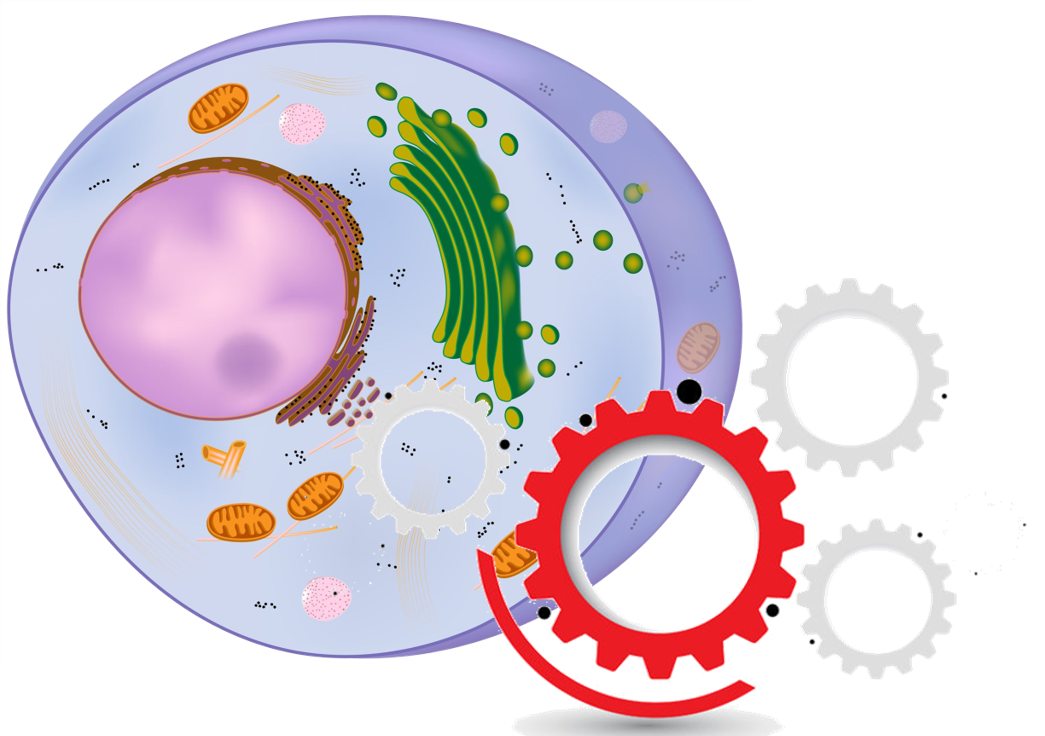
The bioidenticals look and act exactly like your own human hormones and if you think about it, all the evolutionary ‘hardware’ is already there to deal with them for millenia through evolution — i.e. the cellular ‘cogs’ like cell receptors and enzymes are primed for these types of hormones and not synthetic hormones the body has never encountered in nature. Such synthetic hormones present a challenge to the system which has to figure out how to deal with them from a metabolic perspective. Thus many intermediate molecules may be produced in the process of metabolism with each of these intermediates having their own hormonal effect.
Unopposed Oestrogen Effects
Progesterone can modify the oestrogenic effects in tissues like the breast by either decreasing oestrogen receptor availability or increasing an enzyme called 17 beta-hydroxysteroid dehydrogenase which converts the stronger Oestradiol (E2) to the weaker oestrogen Oestrone (E1)3. This may be the mechanism behind the protective effect of natural progesterone on breast tissues in preventing cancer of the breast.
Synthetic progestins increase the risk of breast cancer whereas natural progesterone can protect the breast from cancer risk1, 2.
Cardiovascular Risk
Hormone therapy can increase the risk of cardiovascular risk. In studies such as the famous (or perhaps infamous) Women’s Health Initiative (WHI) study, showed a multitude of adverse effects in women including a significant risk in heart attacks and strokes4.
In one study, there was a startling finding where the use of oestrogen + synthetic progestin resulted in a 290% increase in the risk of blood clots in comparison to the group that never received hormone replacement therapy (HRT). In contrast, the group who received natural progesterone + oestrogen had a 30% decreased risk of blood clotting and clotting is a big factor in cardiovascular risk4.

High Density Lipoprotein (HDL) the so-called “good” cholesterol that protects from heart and vascular disease is reduced by synthetic progestins and increased by natural progesterone. The right combination of oestrogen and progesterone in formulations can make a world of difference with the beneficial oestrogenic effects on HDL reversed by synthetic progestins and preserved with natural progesterone6.
Endometriosis and the use of Natural Progesterone
A relative excess of oestrogen is a major force driving endometriosis and spread. Progesterone counteracts this oestrogenic activity. For a problem that may be lifelong and a disease that may cause devastating effects such as severe pain and infertility, it is vital for medical practitioners not to put a woman in harm’s way for short-term gain. Choosing hormone therapy wisely is the ethical thing to do.
At one stage the only argument against the use of bioidentical (natural) hormones, was that these needed to be formulated through compounding chemists where formulation and dose errors could occur. This has now been thrown out the door with numerous pharmaceutical companies producing natural hormone formulations that are highly standardized. Bioidentical oestrogen, testosterone and progesterone formulations are widely available now neatly packaged with the stamp of a pharmaceutical company and so there is no excuse now to use artificial compounds that your body needs to work out how to metabolize and excrete in contrast to bioidentical hormones where biochemical pathways created by evolution are fully ‘aware’ of how to metabolize and then excrete the hormone metabolites.
Prometrium® is one such pharmaceutical bioidentical progesterone available in capsule form. Many specialists are advising women to use a transvaginal approach i.e. to insert the capsule into the vagina before bed as progesterone can help with sleep as well as target specific gynaecological tissues depending on where in the vagina the medication is placed.
Avoiding first-pass metabolism
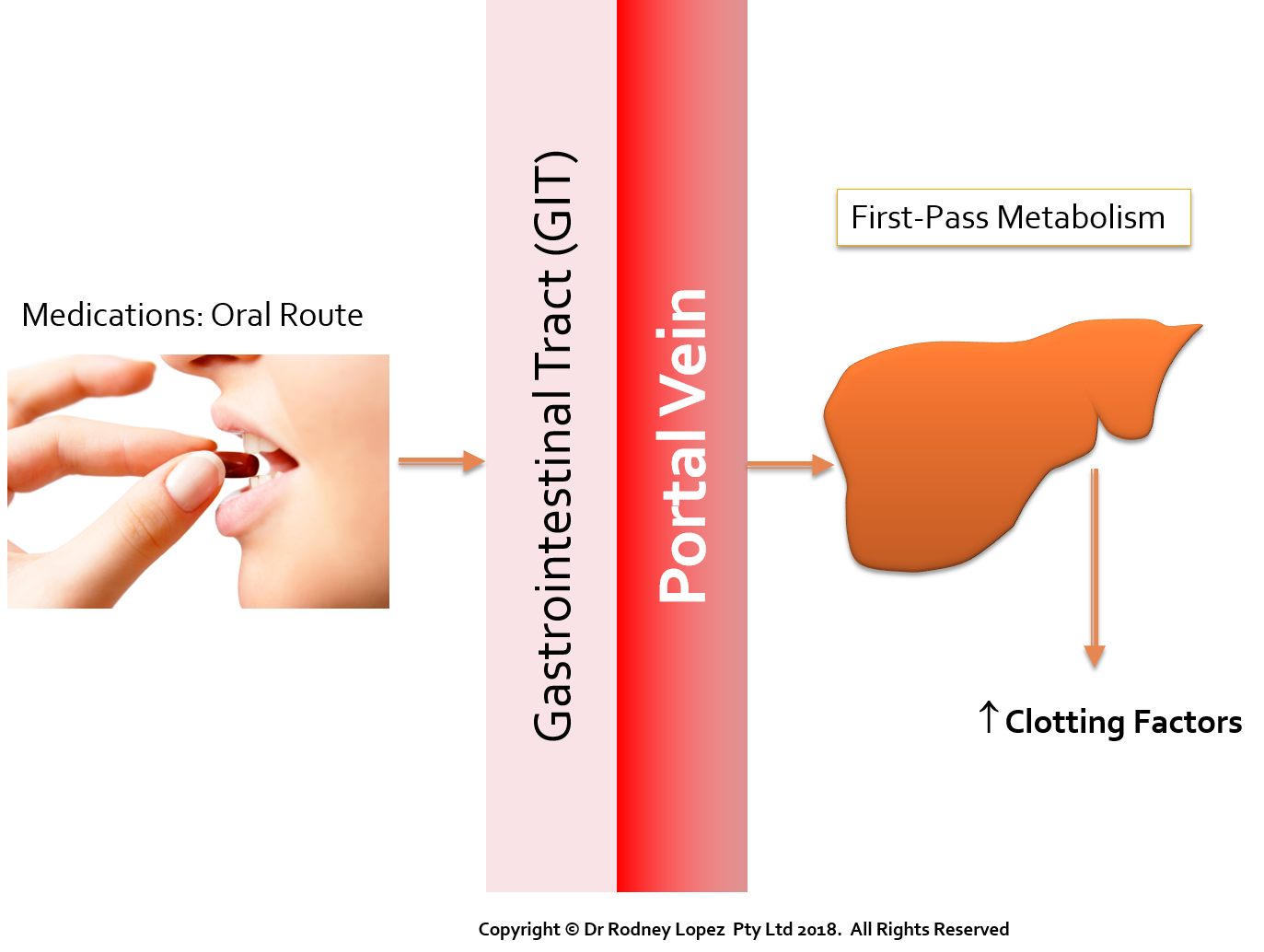
By using a transdermal (across the skin e.g. use of a gel rubbed into the skin) or a transvaginal route where a capsule or pill is inserted into the vagina, this by-passes the oral Gut-Liver route where the drug is absorbed in the gastrointestinal tract (GIT) and transported via the portal vein to the liver where it is metabolized first and then released into the bloodstream for distribution to other parts of the body. The disadvantage is that the liver produces clotting factors in higher amounts leading to thrombotic (clotting) risk.
The amazing blood distribution effects of the anterior and posterior vagina
You can use this to your advantage. This is an anatomical fact that can preferentially distribute a compound like a hormone or pharmaceutical depending on where in the vagina the pill, capsule or cream is placed.
Elegant studies have shown this preferential distribution7,8.
The reason for this is that the upper and lower part of the vagina have differing embryological origins9 and where the anterior vagina shares a common blood supply.
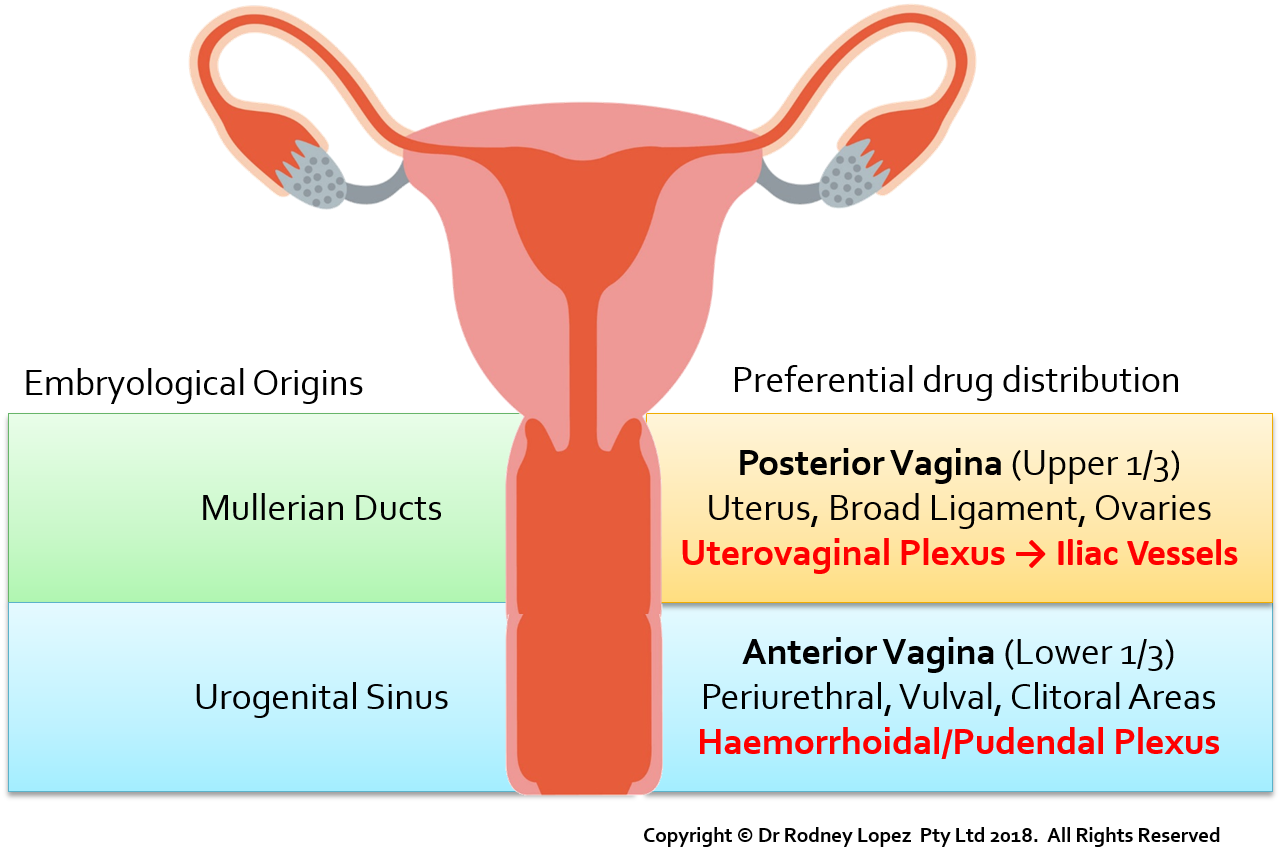
Upper (Posterior) Vaginal Placement
of Hormones or Medications
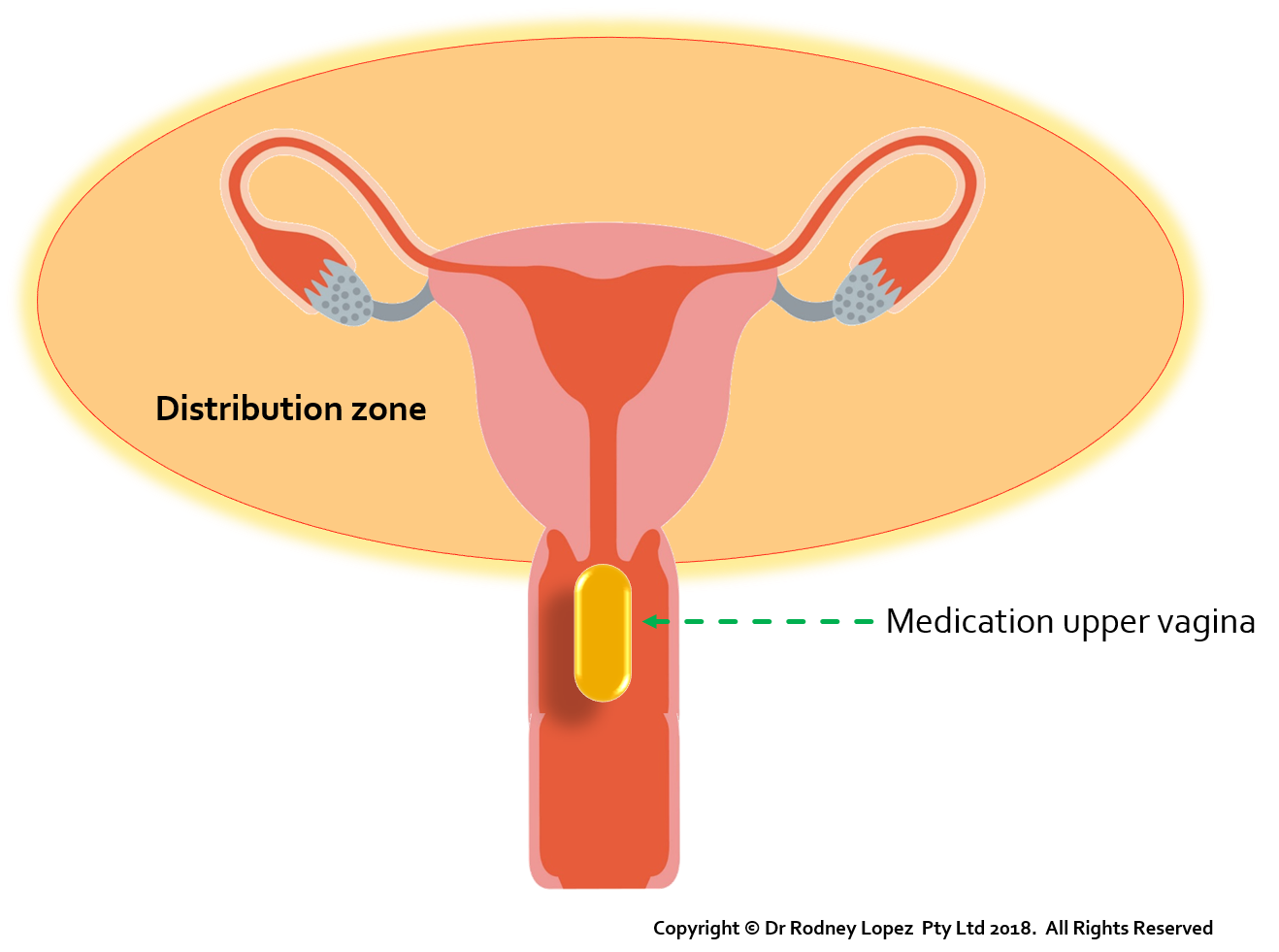
Anterior placement
of Hormones or Medications
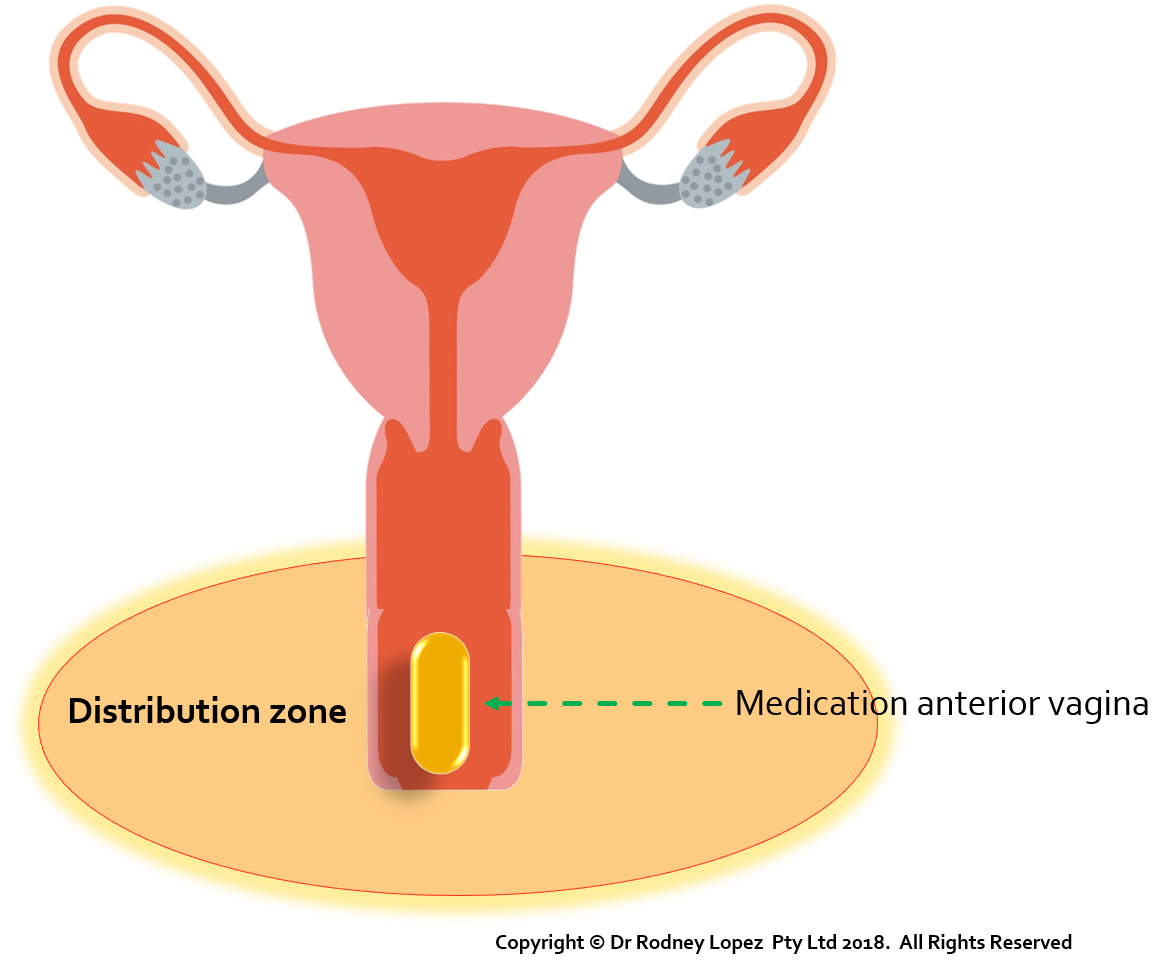
Using this knowledge to our advantage in the delivery of hormones or medications
Knowing these amazing anatomical facts about the vagina, we can use this to our advantage and have the delivery of treatments through the vaginal lining (the vaginal mucosa) directly to the anatomical sites of action thus avoiding first-pass liver metabolism and the possibility of increasing clotting factors as a result of liver metabolism. This decreases cardiovascular risk.
For postmenopausal women suffering from painful intercourse or recurrent vaginal infections or decreased sensitivity of the clitoris and labia due to oestrogen deficiency and dry vagina, then applying creams such as Ovestin® on a finger and then applying it to the anterior anterior part of the vagina with some being smeared on the clitoris and vulva, can help limit the effects to this anterior distribution zone.
Progesterone capsules such as Prometrium (Natural Progesterone in Sunflower oil within a gelatin capsule) can also be used in the vagina. This is so effective as a delivery mechanism it can just be used on an Monday/Wednesday/Friday.
However, these hormone regimens depend on many clinical issues and need to be under the care of a medical practitioner or Gynaecologist.
This information is simply to provide you with insights to help guide you in choice of treatment.


References:
- Fournier A, Berrino F, Clavel-Chapelon F (2008). “Unequal risks for breast cancer associated with different hormone replacement therapies: results from the E3N cohort study”. Breast Cancer Res. Treat. 107 (1): 103–11. doi:10.1007/s10549-007-9523-x. PMC 2211383 Freely accessible. PMID 17333341.
- Campagnoli C, Clavel-Chapelon F, Kaaks R, Peris C, Berrino F (July 2005). “Progestins and progesterone in hormone replacement therapy and the risk of breast cancer”. The Journal of Steroid Biochemistry and Molecular Biology. 96 (2): 95–108. doi:10.1016/j.jsbmb.2005.02.014. PMC 1974841 Freely accessible. PMID 15908197.
- Mauvais-Jarvis, P., Kuttenn, F. and Gompel, A., 1986. Antiestrogen action of progesterone in breast tissue. Breast cancer research and treatment, 8(3), pp.179-188.
- Canonico, M., Oger, E., Plu-Bureau, G., Conard, J., Meyer, G., Lévesque, H., Trillot, N., Barrellier, M.T., Wahl, D., Emmerich, J. and Scarabin, P.Y., 2007. Hormone therapy and venous thromboembolism among postmenopausal women: impact of the route of estrogen administration and progestogens: the ESTHER study. Circulation, 115(7), pp.840-845.
- Writing Group for the Women’s Health Initiative Investigators, 2002. Risks and benefits of estrogen plus progestin in healthy postmenopausal women: principal results from the Women’s Health Initiative randomized controlled trial. Jama, 288(3), pp.321-333.
- Ottosson, U.B., 1984. Oral progesterone and estrogen/progestogen therapy: effects of natural and synthetic hormones on subfractions of HDL cholesterol and liver proteins. Acta Obstetricia et Gynecologica Scandinavica, 63(sup127), pp.1-37.
- Cicinelli, E., Rubini, G., De Ziegler, D., Barba, B., Pinto, V., Di Stefano, M.G. and Mele, M., 2001. Absorption and preferential vagina-to-uterus distribution after vaginal administration of 99mTc-pertechnetate in postmenopausal women. Fertility and sterility, 76(6), pp.1108-1112.
- Cicinelli, E., de Ziegler, D., Morgese, S., Bulletti, C., Luisi, D. and Schonauer, L.M., 2004. “First uterine pass effect” is observed when estradiol is placed in the upper but not lower third of the vagina. Fertility and sterility, 81(5), pp.1414-1416.
- O’connell, H.E., Eizenberg, N., Rahman, M. and Cleeve, J., 2008. The anatomy of the distal vagina: towards unity. The journal of sexual medicine, 5(8), pp.1883-1891.
